


Helping Communities Recognize and Respond to Coercive Control
Clare Alden helps audiences understand the hidden dynamics of intimate partner violence and coercive control and shares practical, trauma-informed ways to help yourself and support the people around you.

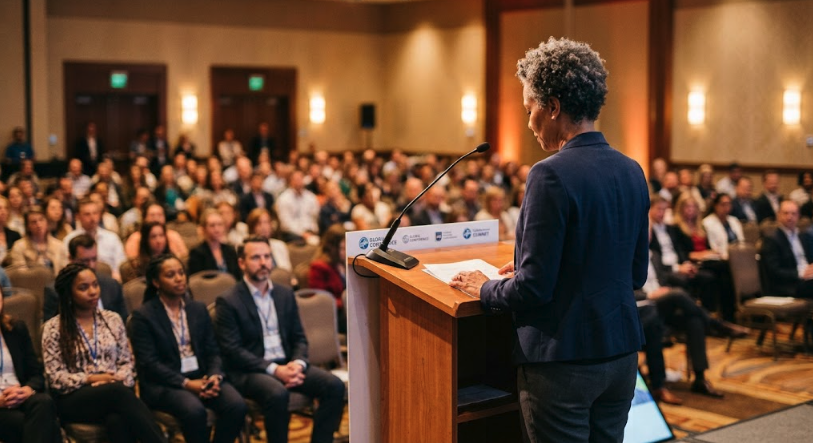
Who Clare Speaks to
Clare presents for domestic and sexual violence programs, human service agencies, conferences, professional trainings, faith and community groups, workplaces, and family and youth-serving organizations. Her sessions are designed for advocates and educators, friends and family, colleagues and neighbors — in short they are for anyone who wants to help, but lacks specialized training.
Speaking Topics
Those Who Suffer in Silence: How to Help
Many women don't recognize their experience with their partner as coercive control, or don't feel able or safe to reach for help. These women suffer in silence.
Intimate partner abuse and coercive control affect millions of women who never think of themselves as "abused," profoundly compromising their safety, independence, and sense of who they are. Physical violence is just one tool from the workshop of a controlling partner. Although physical injuries are easier to identify and name, emotional and psychological control precede physical battery and come in a multitude of forms and degrees that can be much more difficult to detect and recognize as coercive control.
The people around them are often in the best position to help. But well-meaning efforts can sometimes deepen a person's isolation or increase her risk by making remarks or giving advice that is unhelpful at best and often harmful or dangerous. Most people who want to help have never been trained to do so safely.
Practical, simple, trauma-informed strategies can help support someone who may be suffering in silence. Friends, family, and communities can learn how to respond in ways that protect a person's safety, autonomy, and dignity. This approach centers on three core supports:
Safe Space | Support | Self-Care
Recognizing the patterns and utilizing simple strategies, like deep listening and encouraging self care, can help survivors reconnect with themselves, rebuild confidence in their own judgment, renew their sense of agency, and ultimately seek professional help.
Formats: keynote · conference breakout · training or workshop. Content can be tailored for advocates and professionals or for a general community audience.

The framework
The three S's: Safe Space, Social Support, Self-Care.
Clare's "What Can I Do?" and "How Can I Help?" resources translate these ideas into concrete, everyday actions to help restore personal agency and support connection with professionals who can assist them.
A Personal Agency Framework for the Early Recognition and Prevention of Coercive Control.
A shared understanding of how coercive control erodes personal agency can help with detection of warning signs and restoration of self determination.
What audiences take away
A clearer understanding of coercive control and why it so often goes unseen.
Concrete tools they can use immediately as
advocates, professionals, or simply as caring people.
Confidence to respond in ways that help rather than harm.
A framework their whole community can share.


ABOUT CLARE
Clare Alden is an advocate, educator, and community leader whose work focuses on coercive control, intimate partner violence, and empowering women affected by relationship abuse. She currently serves on New York State's Violence Against Women Prevention Advisory Council and has volunteered with domestic violence programs while providing direct support to children and families through her work as a Court Appointed Special Advocate (CASA) and in community-based human services.
Clare brings a unique combination of lived experience, professional training, public service, and leadership to her work. She holds a Master of Science in Community Education from Cornell University and has served on numerous nonprofit boards of directors and community action groups. She has spent her career leading community-based programs and organizations, including serving as Executive Director and CEO of a regional nonprofit organization dedicated to empowering girls and their group leaders. In addition to her advocacy and prevention work, she has conducted extensive interviews with more than 100 women as part of her ongoing study and writing on coercive control and abusive relationships.
Through speaking, advocacy, and education, Clare helps individuals and communities recognize the often-hidden dynamics of coercive control and develop effective, empowering approaches to supporting those experiencing abuse. Her work emphasizes:
Safety
Self-awareness and self-care
Social connection
Skill building for friends and family
Helping survivors reclaim trust in their own judgment
Seeking professional help when they are ready. .

What people are saying
“Clare brings a rare combination of compassion, insight, and lived experience to every conversation. Her ability to listen deeply, connect authentically, and empathize with others creates an atmosphere of trust, understanding, and meaningful dialogue. Drawing on both her personal journey and her professional experience addressing domestic abuse, Clare helps people feel seen, heard, and supported.
Whether speaking with survivors, professionals, or community audiences, she has a remarkable gift for making complex and difficult topics accessible and relatable. Her work not only supports those directly affected by abuse but also helps others develop a deeper understanding of this widespread and often misunderstood issue. Clare’s voice inspires awareness, connection, and hope.”
Bring this work to your audience
Clare would be glad to discuss a session tailored to your organization or event.